
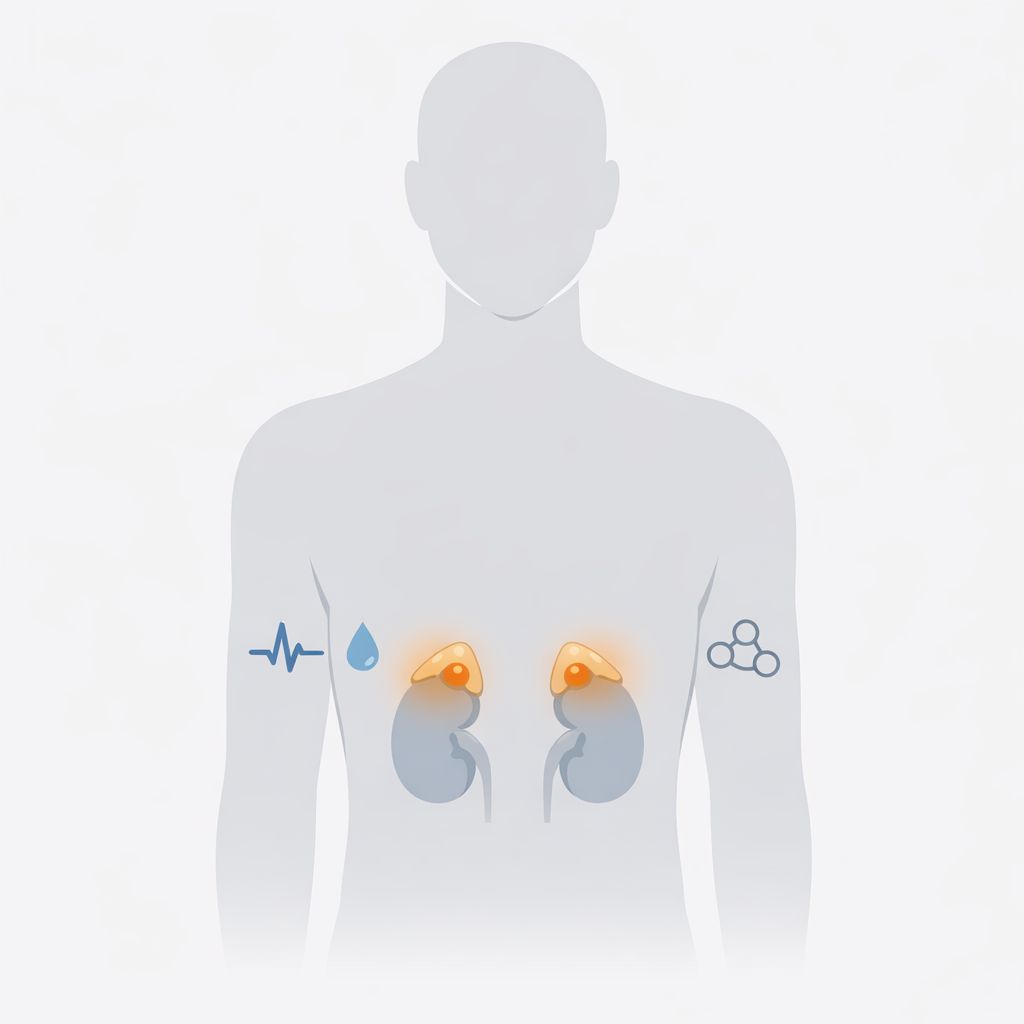
Phaeochromocytoma
Phaeochromocytoma is a rare tumour of the adrenal glands that causes overproduction of adrenaline and noradrenaline. These are the hormones responsible for the fight-or-flight response, and excess production can cause severe and sometimes dangerous symptoms.
Symptoms are often episodic and may include severe headaches, rapid heartbeat, excessive sweating, high blood pressure (which may be sustained or come in sudden surges), tremor and anxiety.
Plasma metanephrines (the breakdown products of adrenaline and noradrenaline) are the most sensitive blood test for detecting phaeochromocytoma. A negative result virtually rules out the diagnosis. If metanephrines are elevated, imaging with CT or MRI is used to locate the tumour.
Most phaeochromocytomas are benign and can be surgically removed, though lifelong monitoring may be recommended, particularly in people with inherited genetic conditions that predispose to these tumours.
Causes of Phaeochromocytoma
Phaeochromocytomas arise from chromaffin cells in the adrenal medulla (the inner part of the adrenal glands). These cells produce catecholamines (adrenaline, noradrenaline and dopamine).
In most cases, the cause is unknown (sporadic). However, around 30 to 40% of phaeochromocytomas have a genetic basis:
- Multiple endocrine neoplasia type 2 (MEN2), caused by mutations in the RET gene
- Von Hippel-Lindau disease (VHL)
- Neurofibromatosis type 1 (NF1)
- Succinate dehydrogenase (SDH) gene mutations, which are also associated with paragangliomas (similar tumours that develop outside the adrenal glands)
Phaeochromocytomas are sometimes called "the great mimic" because their symptoms can resemble many other conditions. Genetic testing is recommended for all patients diagnosed with phaeochromocytoma to identify inherited syndromes and guide family screening.
 Learn more on the official NHS page .
Clinical review

Dr. Shahzaib Ahmad MBBS, BSc, MRCP, FRCA, FFICM
Clinical Supervisor - Vitall|GMC 7495062|Profile
Reviewed on 13/10/2026
Next review due 13/10/2027
Review focus: Blood biomarkers, laboratory testing methodology, and biochemical interpretation.
