
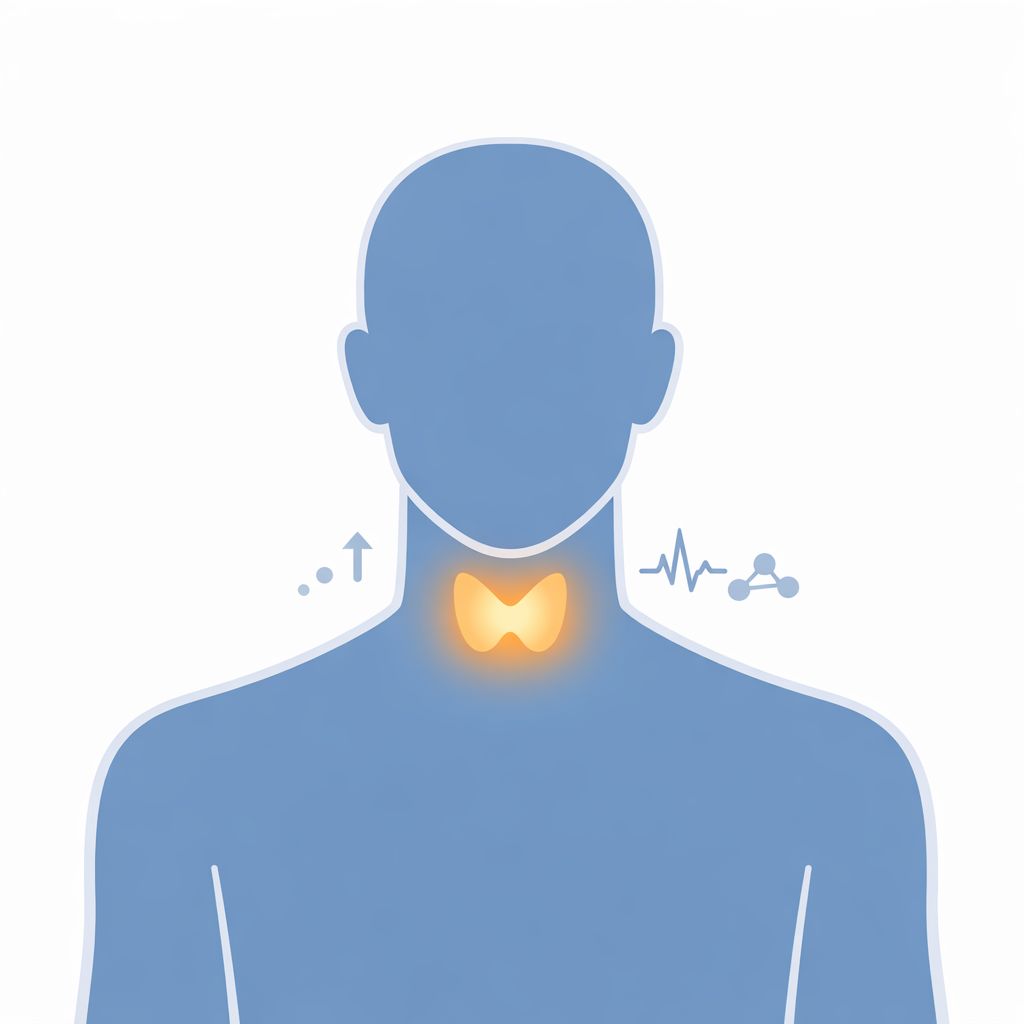
Overactive thyroid
An overactive thyroid (hyperthyroidism) occurs when the thyroid gland produces too much thyroid hormone. This accelerates the body's metabolism and can affect multiple organ systems.
The most common cause is Graves' disease, an autoimmune condition. Other causes include thyroid nodules and thyroiditis (inflammation of the thyroid).
Symptoms may include:
- Unexplained weight loss despite a normal or increased appetite
- A rapid or irregular heartbeat
- Anxiety, irritability and difficulty sleeping
- Tremor, sweating and heat intolerance
Triiodothyronine (T3) is one of the key thyroid hormones and is often elevated in hyperthyroidism. A blood test for TSH, free T4 and T3 together provides a comprehensive picture of thyroid function.
Causes of Overactive thyroid
The most common cause of hyperthyroidism is Graves' disease, an autoimmune condition in which the immune system produces antibodies (TSH receptor antibodies) that stimulate the thyroid gland to overproduce thyroid hormones.
Other causes include:
- Toxic multinodular goitre, in which several nodules in the thyroid gland become overactive, more common in older adults
- Toxic adenoma, a single overactive thyroid nodule
- Thyroiditis (inflammation of the thyroid), which can cause a temporary release of stored thyroid hormone. This may follow a viral infection (subacute thyroiditis) or occur after pregnancy (postpartum thyroiditis)
- Excessive iodine intake, including from certain medications such as amiodarone
- Over-treatment with levothyroxine for hypothyroidism
Graves' disease accounts for around 75% of hyperthyroidism cases. It is more common in women and may be triggered by stress, infection or hormonal changes in genetically predisposed individuals.
Tests that can help check this condition
 Learn more on the official NHS page .
Clinical review

Dr. Shahzaib Ahmad MBBS, BSc, MRCP, FRCA, FFICM
Clinical Supervisor - Vitall|GMC 7495062|Profile
Reviewed on 12/10/2026
Next review due 12/10/2027
Review focus: Blood biomarkers, laboratory testing methodology, and biochemical interpretation.
