
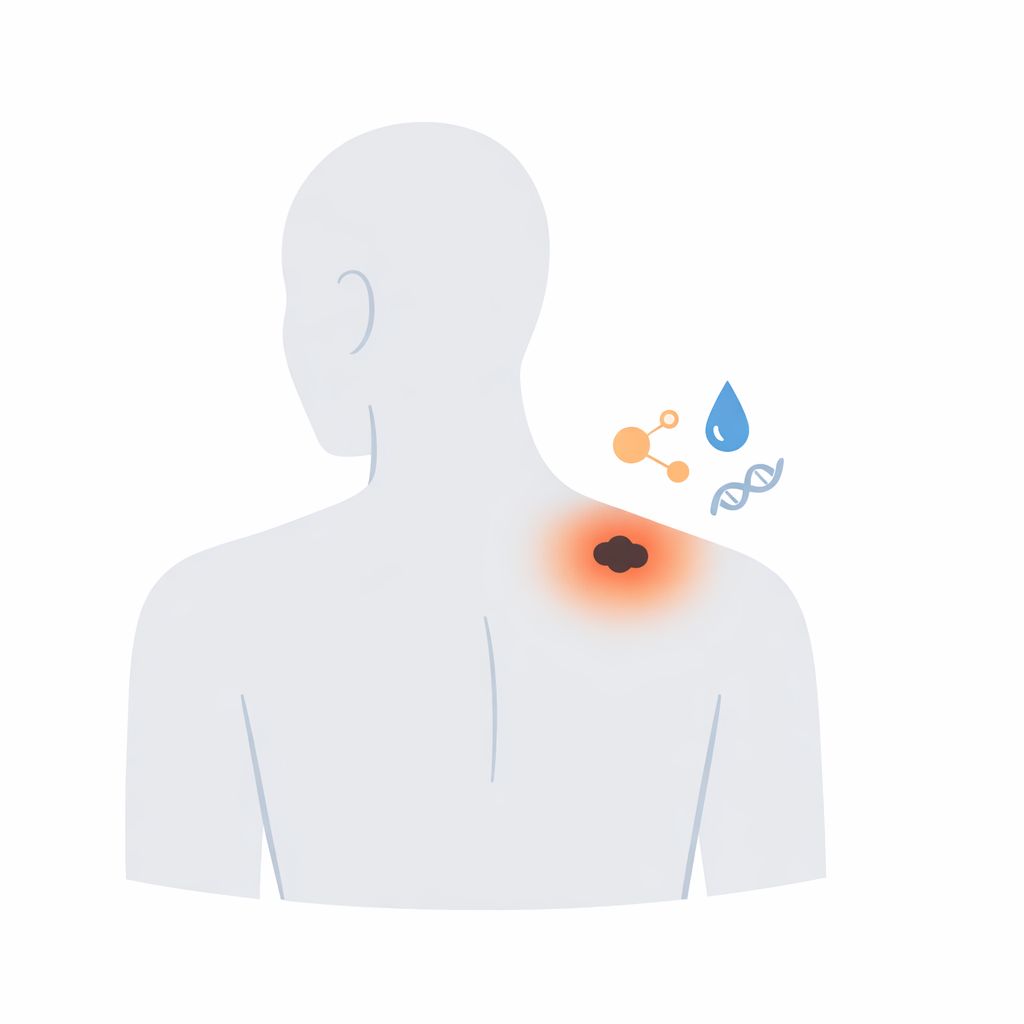
Melanoma skin cancer
Melanoma is a type of skin cancer that develops from the pigment-producing cells (melanocytes) in the skin. It is less common than other types of skin cancer but is more likely to grow and spread if not caught early.
The most common sign is a new mole or a change in an existing mole. Warning signs to look for include asymmetry, irregular borders, uneven colour, a diameter greater than 6mm and any change in size, shape or colour over time.
Key risk factors include excessive UV exposure from sunlight or sunbeds, having many moles, fair skin that burns easily, a history of sunburn and a family history of melanoma.
Polygenic risk scores assess genetic susceptibility to melanoma by evaluating the combined effect of multiple genetic variants. When combined with awareness of lifestyle risk factors and skin self-examination, they can support a more personalised approach to prevention.
Causes of Melanoma skin cancer
Melanoma develops when melanocytes (pigment-producing cells in the skin) sustain DNA damage, most commonly from ultraviolet (UV) radiation.
The main risk factors are:
- UV exposure from sunlight and artificial sources such as sunbeds. Intermittent intense exposure (causing sunburn) carries a particularly high risk
- Skin type, with fair-skinned individuals who burn easily and tan poorly at greatest risk
- Number of moles, as having more than 100 moles significantly increases risk
- Atypical moles (dysplastic naevi), which are larger and more irregular than normal moles
- Family history of melanoma, particularly in first-degree relatives
- Personal history of previous melanoma or other skin cancers
- Immunosuppression
Genetic factors also contribute. Polygenic risk scores can identify individuals with a higher inherited susceptibility. Melanoma is largely preventable through sun protection, avoidance of sunbeds and early detection through skin awareness.
Tests that can help check this condition
 Learn more on the official NHS page .
Clinical review

Dr. Shahzaib Ahmad MBBS, BSc, MRCP, FRCA, FFICM
Clinical Supervisor - Vitall|GMC 7495062|Profile
Reviewed on 13/10/2026
Next review due 13/10/2027
Review focus: Blood biomarkers, laboratory testing methodology, and biochemical interpretation.
