
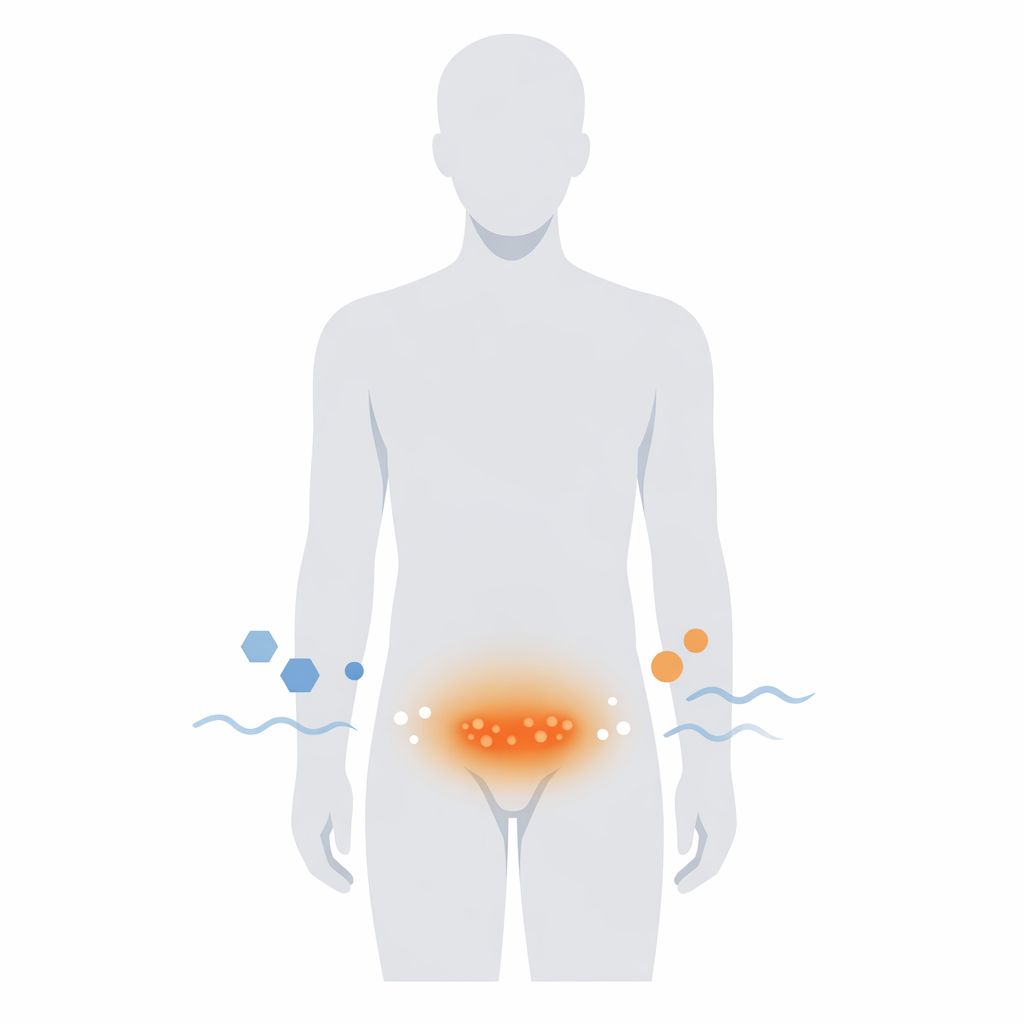
Genital herpes
Genital herpes is a common sexually transmitted infection caused by the herpes simplex virus (HSV). There are two types: HSV-1, which more commonly causes cold sores, and HSV-2, which more commonly causes genital herpes. Both types can affect either location.
Many people carry the virus without knowing it, as symptoms can be mild or absent entirely. When symptoms occur, they typically involve painful blisters or sores around the genitals, thighs or buttocks. The first outbreak is usually the most severe, with subsequent episodes tending to be milder and shorter.
There is no cure for genital herpes, but antiviral medication can reduce the severity and frequency of outbreaks. Blood tests for HSV-1 and HSV-2 antibodies can help determine whether someone has been exposed to the virus.
Causes of Genital herpes
Genital herpes is caused by the herpes simplex virus, primarily HSV-2 but increasingly also HSV-1 (which traditionally causes oral cold sores).
Transmission occurs through:
- Direct skin-to-skin contact during vaginal, anal or oral sex with an infected person
- Contact with herpes sores, saliva or genital secretions
The virus can be transmitted even when no visible sores are present, through a process called asymptomatic viral shedding. After initial infection, the virus establishes latency in nerve cells near the spine and can reactivate periodically. Triggers for recurrence include stress, illness, fatigue, hormonal changes and UV exposure.
Tests that can help check this condition
 Learn more on the official NHS page .
Clinical review

Dr. Shahzaib Ahmad MBBS, BSc, MRCP, FRCA, FFICM
Clinical Supervisor - Vitall|GMC 7495062|Profile
Reviewed on 12/10/2026
Next review due 12/10/2027
Review focus: Blood biomarkers, laboratory testing methodology, and biochemical interpretation.
