
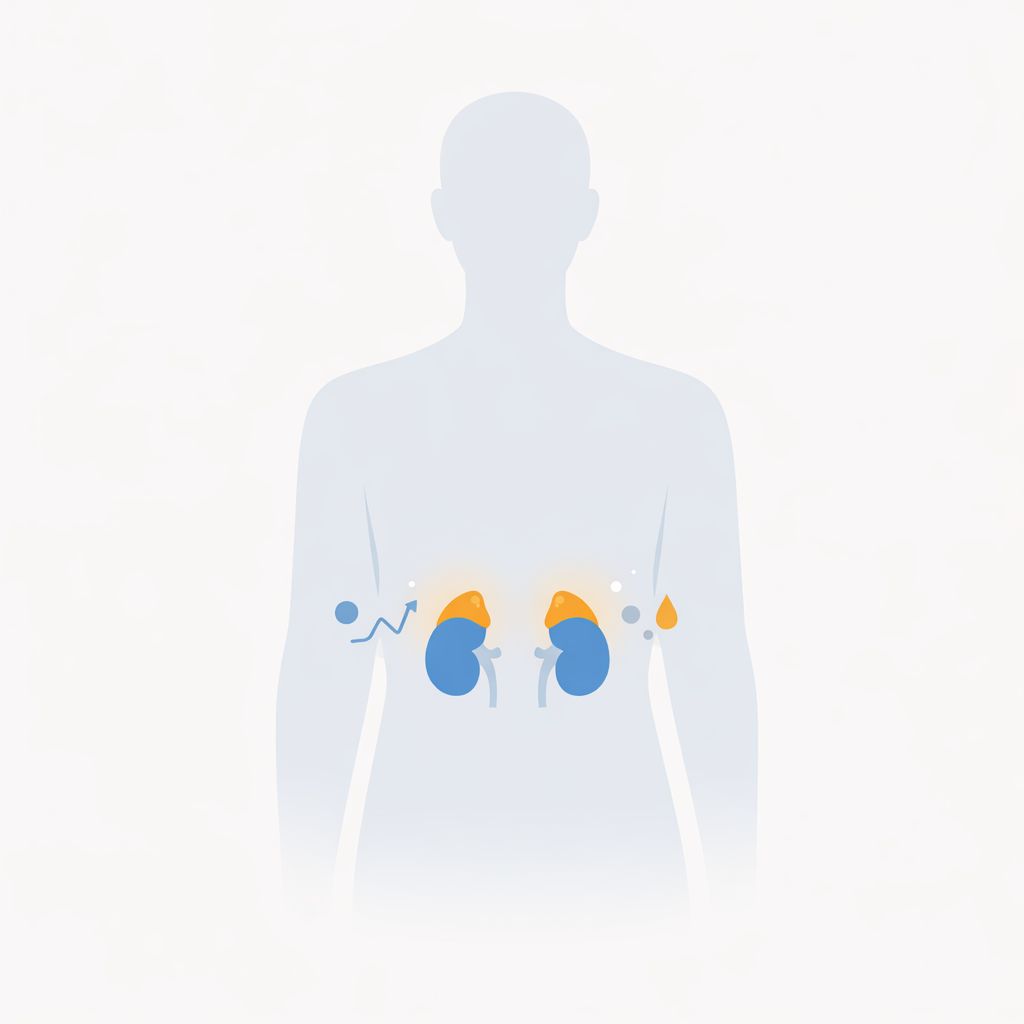
Cushing's syndrome
Cushing's syndrome occurs when the body is exposed to high levels of the hormone cortisol over a prolonged period. Cortisol is produced by the adrenal glands and plays a role in the stress response, metabolism and immune function.
The most common cause is long-term use of corticosteroid medications. Less commonly, the body overproduces cortisol due to a tumour in the pituitary gland (Cushing's disease), adrenal glands or elsewhere.
Symptoms may include:
- Weight gain, particularly around the abdomen and face
- Thinning skin that bruises easily
- Muscle weakness and fatigue
- High blood pressure and elevated blood sugar
- Mood changes and difficulty sleeping
Blood and salivary cortisol tests are used to detect abnormal cortisol levels. Salivary cortisol measured at multiple time points across the day can reveal disruptions to the normal diurnal cortisol pattern.
Causes of Cushing's syndrome
Cushing's syndrome is caused by prolonged exposure to excess cortisol. The source of that excess determines the type:
- Exogenous Cushing's syndrome (the most common type) is caused by taking corticosteroid medications such as prednisolone for conditions like asthma, rheumatoid arthritis or after organ transplantation
- Cushing's disease is caused by a benign tumour (adenoma) in the pituitary gland that produces too much adrenocorticotropic hormone (ACTH), stimulating the adrenal glands to overproduce cortisol
- Adrenal tumours, either benign or, rarely, malignant, can produce cortisol independently
- Ectopic ACTH syndrome, in which ACTH is produced by a tumour outside the pituitary, most commonly a small cell lung cancer or carcinoid tumour
Endogenous Cushing's syndrome (from the body's own overproduction) is rare, affecting around 1 in 50,000 people.
Tests that can help check this condition
 Learn more on the official NHS page .
Clinical review

Dr. Shahzaib Ahmad MBBS, BSc, MRCP, FRCA, FFICM
Clinical Supervisor - Vitall|GMC 7495062|Profile
Reviewed on 13/10/2026
Next review due 13/10/2027
Review focus: Blood biomarkers, laboratory testing methodology, and biochemical interpretation.
