
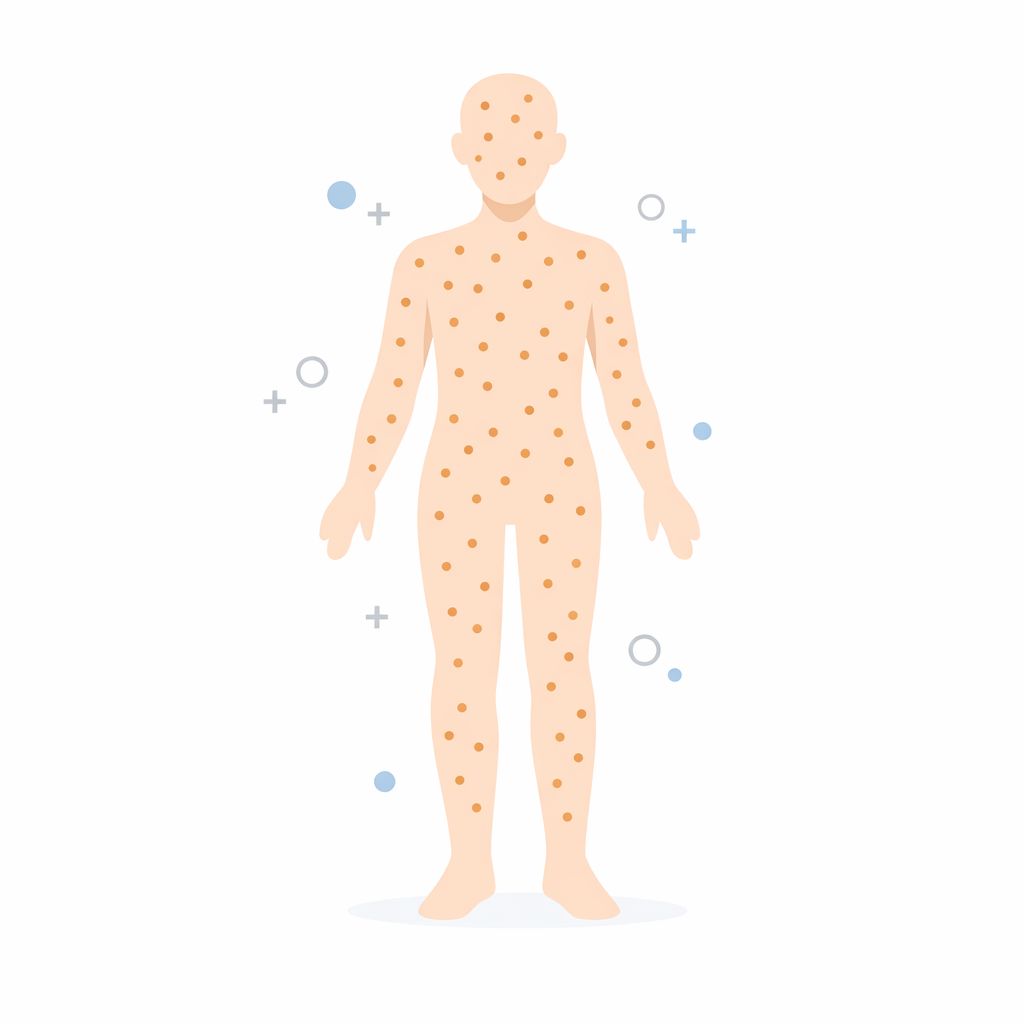
Chickenpox
Chickenpox is a common, highly infectious illness caused by the varicella-zoster virus. It is most common in children under 10 but can affect people of any age.
The main symptom is an itchy, spotty rash that progresses from red spots to fluid-filled blisters and then crusts over. Other symptoms include a high temperature, headache and feeling generally unwell.
Chickenpox is usually mild in children but can be more severe in adults, pregnant women and people with weakened immune systems. After recovery, the virus remains dormant in the body and can reactivate later in life as shingles.
A varicella IgG antibody blood test confirms immunity to chickenpox, which is particularly useful for healthcare workers, women planning pregnancy and people about to start immunosuppressive treatment.
Causes of Chickenpox
Chickenpox is caused by the varicella-zoster virus (VZV), a member of the herpes virus family. It is highly contagious and spreads through:
- Direct contact with the fluid from chickenpox blisters
- Airborne droplets from coughing or sneezing
The virus is contagious from one to two days before the rash appears until all blisters have crusted over (usually five to seven days after onset). A person who has not had chickenpox or been vaccinated has a very high chance of becoming infected after exposure.
After the initial infection resolves, VZV remains dormant in nerve cells. It can reactivate years later as shingles (herpes zoster), particularly in people over 70 or those with weakened immune systems.
Tests that can help check this condition
 Learn more on the official NHS page .
Clinical review

Dr. Shahzaib Ahmad MBBS, BSc, MRCP, FRCA, FFICM
Clinical Supervisor - Vitall|GMC 7495062|Profile
Reviewed on 13/10/2026
Next review due 13/10/2027
Review focus: Blood biomarkers, laboratory testing methodology, and biochemical interpretation.
