
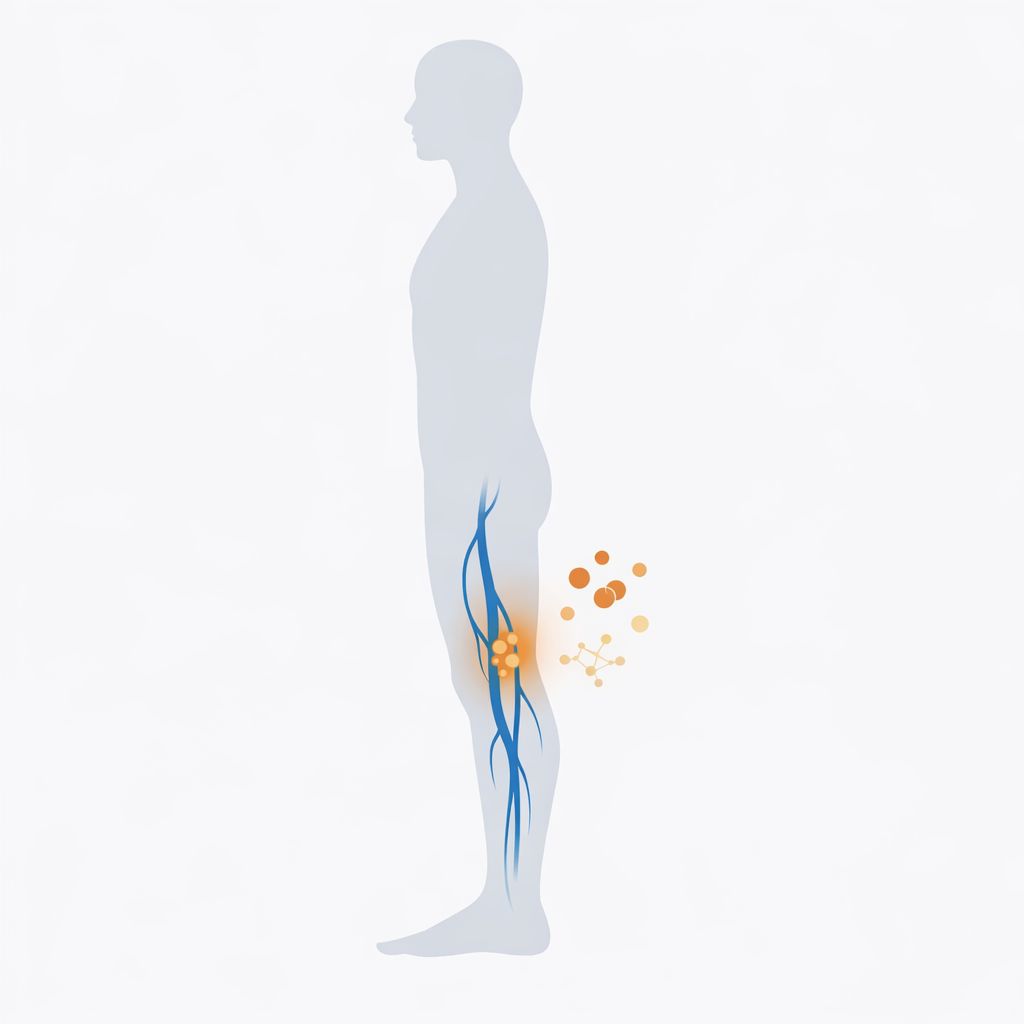
Blood clots
Blood clots can form in veins or arteries and may partially or completely block blood flow. A clot in a deep vein, usually in the leg, is called a deep vein thrombosis (DVT). If a piece of the clot breaks off and travels to the lungs, it can cause a pulmonary embolism (PE), which is a medical emergency.
Risk factors include prolonged immobility, recent surgery, pregnancy, taking the combined contraceptive pill, obesity and a family history of clotting disorders.
Symptoms of a DVT in the leg may include pain, swelling, warmth and redness. A PE may cause sudden shortness of breath, chest pain and coughing up blood.
Clotting tests such as prothrombin time (PT) and INR are used to assess the clotting mechanism and to monitor anticoagulant therapy such as warfarin. Fibrinogen, a clotting protein, is also measured as part of a broader assessment of clotting function and cardiovascular risk.
Causes of Blood clots
Blood clots form when the normal balance between clot formation and clot breakdown is disrupted. This can happen due to a combination of factors described by Virchow's triad:
- Stasis (slowed blood flow) from prolonged immobility, such as long-haul flights, bed rest after surgery, or a sedentary lifestyle
- Endothelial injury (damage to blood vessel walls) from surgery, trauma, infection or inflammation
- Hypercoagulability (increased tendency to clot) from inherited conditions such as factor V Leiden, prothrombin gene mutations, or acquired states such as cancer, pregnancy and use of oestrogen-containing medications
Other risk factors include obesity, smoking, age over 60, previous DVT or PE, active cancer and certain autoimmune conditions such as antiphospholipid syndrome.
Tests that can help check this condition
 Learn more on the official NHS page .
Clinical review

Dr. Shahzaib Ahmad MBBS, BSc, MRCP, FRCA, FFICM
Clinical Supervisor - Vitall|GMC 7495062|Profile
Reviewed on 13/10/2026
Next review due 13/10/2027
Review focus: Blood biomarkers, laboratory testing methodology, and biochemical interpretation.
